

A hailstorm can come and go in a few minutes, but the questions it leaves behind can last for weeks. Was the roof damaged? Should you call your insurance company? Who should look at it? In Northeast Ohio, spring and summer thunderstorms bring hail often enough that most homeowners will face these questions at some point.
The good news is that a clear plan makes the process much easier. Most of the early steps are things you can do yourself from the ground, and the rest involve knowing when to bring in a professional. For homeowners in Akron and the rest of Summit County, a local contractor page like the hof roofing akron website is one place to find inspection information when you reach that point.
Here is what to do, in order, after hail hits your home.
Step 1: Put Safety First
Wait until the storm has fully passed before going outside. Hailstorms often come with lightning, strong wind, and downed power lines.
Once it is safe:
– Stay off the roof. Wet, damaged shingles are slippery, and hail damage is hard to judge from up close without training anyway.
– Watch for downed lines and broken branches hanging overhead.
– Check inside the house for active leaks, especially in the attic and on top-floor ceilings.
If water is coming in, move belongings away and place buckets or towels to limit damage.
Step 2: Look for Clues From the Ground
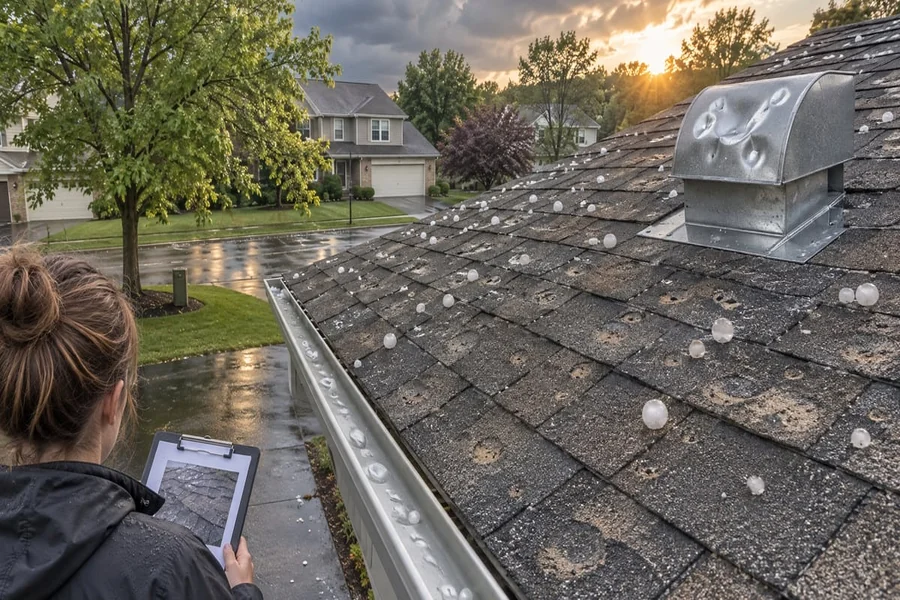
You do not need to climb a ladder to find evidence of hail. Soft metals and other surfaces around your home tell the story. Walk the property and look for:
– **Dented gutters and downspouts.** Dings in aluminum are one of the clearest signs of hail size and direction.
– **Damaged roof vents.** Metal box vents and pipe caps often show dents you can see from the yard.
– **Siding and window trim.** Look for cracks, chips, or spatter marks on vinyl and painted surfaces.
– **Window screens.** Tears or dents in screens are common.
– **Outdoor equipment.** Air conditioner fins, mailboxes, grills, and patio furniture can show impact marks.
– **Shingle granules.** A pile of granules at the bottom of downspouts can indicate shingle bruising.
– **Vehicles and decks.** Dents on cars or marks on wood decks confirm hail of a damaging size.
If you see damage on several of these surfaces, there is a good chance your roof took hits too. It can also help to compare what you see with photos of real storm damage, which many roofers publish online.
Step 3: Document Everything
Photos and notes made right after a storm are some of the most useful tools you will have if you file a claim.
– Write down the date and approximate time of the storm.
– Photograph hailstones next to a coin or ruler for scale, if any are still on the ground.
– Take wide shots of each side of the house, then close-ups of any dents or cracks.
– Photograph interior water stains or leaks.
– Save local weather reports or news coverage that mention hail in your area.
Keep everything in one folder, either on your phone or in the cloud. You will likely refer to it more than once.
Step 4: Prevent Further Damage
Most homeowners insurance policies expect you to take reasonable steps to keep damage from getting worse. If there is an obvious opening or leak:
– Have a professional install a tarp over damaged areas.
– Keep receipts for any emergency repairs or materials.
– Avoid making permanent repairs before an inspection, since the adjuster may need to see the original damage.
Step 5: Schedule a Professional Roof Inspection
Hail damage on asphalt shingles is often subtle. It can appear as soft spots, bruises, cracked shingles, or areas where granules have been knocked loose and the asphalt mat is exposed. This kind of damage may not leak right away, but it can shorten the life of the roof and lead to problems later, especially after a few rounds of freezing and thawing.
A trained roofer can check for:
– Bruising or fractures in shingles
– Granule loss in a random, scattered pattern
– Damage to ridge caps, flashing, and vents
– Cracked skylights or damaged pipe boots
Ask for a written summary and photos of what they find. A reputable inspector will tell you honestly if the damage does not justify a claim.
Step 6: Understand Insurance Claim Basics
Before calling your insurer, take a few minutes to review your policy.
Know Your Deductible
Some policies have a separate deductible for wind and hail, sometimes based on a percentage of your home’s insured value. Knowing this helps you decide whether a claim makes sense.
Check Your Coverage Type
Policies may pay replacement cost or actual cash value. Replacement cost generally covers the cost of a new roof, while actual cash value subtracts depreciation for the roof’s age. Your policy documents or agent can explain which you have.
Watch the Deadlines
Most policies set a time limit for reporting storm damage. These limits vary by insurer and policy, so check yours and report promptly. Waiting too long can make a valid claim harder to prove.
Step 7: Prepare for the Adjuster Visit
After you file, the insurance company will send an adjuster to inspect the damage. To make the most of the visit:
– Have your photos, notes, and inspection report ready.
– Ask whether your roofer can attend. Having a contractor on site can help make sure nothing is overlooked.
– Walk the property with the adjuster and point out damage to gutters, vents, siding, and other areas.
– Ask questions about anything you do not understand, and request a copy of the adjuster’s report.
If you disagree with the findings, ask your insurer about its process for a second inspection or review.
Step 8: Watch Out for Storm Chasers
After a major hailstorm, unfamiliar crews often show up going door to door. Some are honest. Others collect deposits, do rushed work, and leave the area before problems appear.
Be careful with anyone who:
– Pressures you to sign a contract on the spot
– Asks for a large payment before work begins
– Offers to waive or cover your deductible
– Has no local address, references, or proof of insurance
– Asks you to sign over your insurance benefits right away
Take your time. Get estimates from established local contractors who will be around to honor their workmanship warranty years from now.
Moving Forward
Hail damage is stressful, but it is manageable when you take it one step at a time. Stay safe, gather evidence, protect your home from further harm, and get an honest professional opinion before making decisions. A careful approach now helps you get a proper repair and a roof that is ready for the next Northeast Ohio storm season.
